Stories Trapped in Ice
Lukasz Larsson Warzecha & Ulrika Larsson
The history of humanity and the history of Earth's climate are written into the ice cores.
Stories Trapped in Ice features portraits of ice cores from the collection of the 'Ice Core Library' at the Niels Bohr Institute, in Copenhagen, Denmark and tells a story of scientific discovery critical for understanding and projecting rising sea levels, the scientists behind it, and an international effort to understand the past and try to predict the future of our climate.
Ice cores contain layers of ice formed from snowfall over thousands to hundreds of thousands of years. These layers serve as a chronological record of past climate conditions, allowing scientists to reconstruct temperature variations, atmospheric composition, and other climate parameters over long timescales.
Since the 1960s, scientists have drilled ice cores from the polar regions.
Between 2015 and 2023, EastGRIP was an ice core drilling camp and an international science station on the Greenland ice sheet, the second-largest ice body in the world after the Antarctic ice cap.
The Ice Core Library at the Niels Bohr Institute in Copenhagen, Denmark, is considered a national treasure. The storage facility is known for its extensive collection of ice cores extracted from Greenland, Antarctica, and other places.
Stories Trapped in Ice celebrates the often-overlooked effort required to conduct arctic research, while also bringing the inaccessible ice cores to the public domain.
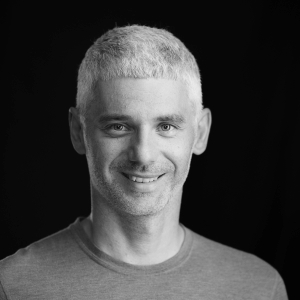
Lukasz Larsson Warzecha is an award-winning documentary photographer, cinematographer and speaker. With almost two decades of experience as a professional photographer and cinematographer, Lukasz is passionate about capturing and sharing stories that inform, inspire, and engage global audiences on the most pressing environmental issues of our time. Lukasz collaborated on communication and outreach projects with the European Space Agency, the European Commission, and other European research institutions. His stories have been published in National Geographic, Science Magazine, The New York Times, Oceanographic Magazine, The Guardian, and many others.